
Not every OT driving assessment ends with either "you're fine" or "you've lost your licence." For many people, the outcome sits somewhere in the middle: you can keep driving, but with conditions.
Licence conditions are one of the most common outcomes of an OT driving assessment. They allow people to keep driving safely by limiting driving to situations that match their current abilities.
This article explains what licence conditions are, how they're applied, and what they mean for your everyday driving.
What are licence conditions?
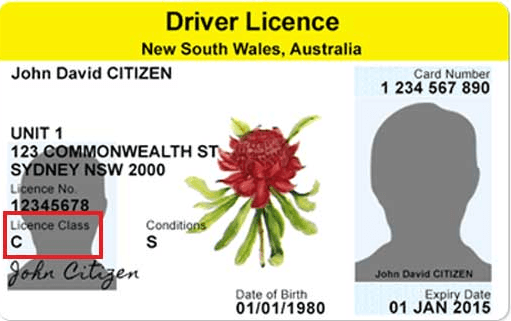
Licence conditions are legal restrictions printed on (or linked to) your driver's licence. They define specific requirements you must follow when driving. They're applied by Transport for NSW based on medical advice, usually from your doctor or OT.
Conditions aren't punishments. They're a way of keeping you on the road safely, rather than cancelling your licence altogether. For many people, conditions are the difference between continuing to drive and losing their licence entirely.
Common licence conditions after an OT driving assessment
Automatic transmission only
This means you can only drive a vehicle with automatic transmission. It's commonly applied when a condition affects your ability to operate a clutch and gear stick (for example, reduced strength or coordination on one side after a stroke, or an upper or lower limb amputation).
In practice, most people in Sydney already drive automatics, so this condition often has minimal impact on daily life.
Daytime driving only
This restricts you to driving during daylight hours. It's typically applied when a condition affects your vision in low-light conditions, or when cognitive or visual processing issues are more pronounced at night.
What counts as "daylight hours" generally means between sunrise and sunset, though Transport for NSW may specify exact times in some cases.
Area restriction (local driving only)
This limits your driving to a specified radius from your home (for example, within 10 km). It's typically applied when a person can drive safely in familiar, lower-complexity environments but may struggle on unfamiliar roads, motorways, or longer trips.
Vehicle modifications required
This specifies that you must drive with certain modifications fitted to your vehicle (for example, "must drive with hand controls" or "must use a steering aid"). This condition is applied when the OT has assessed that modifications are needed for safe vehicle operation.
You can only legally drive a vehicle fitted with the specified modifications.
Must wear corrective lenses
This is the most common licence condition overall and simply requires you to wear your glasses or contact lenses when driving. It's applied based on your vision assessment results.
Regular medical review required
This condition requires you to have periodic medical assessments (usually annually) to continue driving. It's common for progressive conditions like dementia or Parkinson's disease, where your fitness to drive needs to be monitored over time.
How conditions are applied
The typical process is:
Your OT driving assessment identifies that you can drive safely, but only under certain circumstances
The OT recommends specific conditions in their report
The report is sent to Transport for NSW
Transport for NSW reviews the recommendation and applies the conditions to your licence
You receive written notification of the conditions
Your licence is updated (conditions may be printed on the licence card or recorded in the Transport for NSW system)
Transport for NSW makes the final decision about which conditions to apply. They almost always follow the OT's recommendations, but the formal authority rests with them.
What happens if you don't follow your conditions?
Licence conditions are legal requirements. Driving outside your conditions (for example, driving at night when you have a daytime-only condition, or driving without your prescribed modifications) is the same as driving without a valid licence.
The consequences include:
Fines and demerit points
Your insurance being invalid (meaning you're personally liable for any accident)
Potential suspension or cancellation of your licence
In serious cases, criminal charges
Can conditions be changed or removed?
Yes. Conditions aren't necessarily permanent.
If your condition improves, your doctor can refer you for another OT driving assessment. If the reassessment shows that the condition is no longer affecting your driving, the OT can recommend that the restriction be removed. Transport for NSW then updates your licence.
If your condition worsens, additional conditions may be added, or the recommendation may change to licence cancellation.
At your periodic medical review, your doctor and/or OT may recommend adjusting conditions based on your current situation.
To request a change to your licence conditions, you'll need updated medical or OT assessment evidence. You can't simply request a change without clinical justification.
The modified licence option for older drivers
For drivers aged 75 and over, there's also an option called a "modified licence" (separate from licence conditions). A modified licence restricts you to driving within a specified local area. If you choose a modified licence, you may not need to complete the older driver test.
A modified licence is a voluntary choice, different from conditions imposed after an OT assessment. You can discuss this option with your GP or Service NSW.
Living with licence conditions
Having conditions on your licence takes some adjustment, but most people find that it's manageable and far better than the alternative of not driving at all.
Some practical tips:
Plan your driving around your conditions. If you have a daytime-only restriction, schedule appointments and errands during daylight hours. If you have an area restriction, plan your regular trips within your radius.
Tell your family. Make sure the people around you know about your conditions, so they can help with trips that fall outside your restrictions (for example, evening events or longer drives).
Check your insurance. Notify your car insurer about your licence conditions. Most will continue to cover you as long as you're driving within your conditions.
Keep your licence up to date. If your conditions change after a reassessment, make sure your licence is updated.
How to get an assessment
If your doctor or Transport for NSW has recommended an OT driving assessment, you can start the process at steerdriving.com.au/referral.
Need an OT driving assessment in Sydney? Steer Driving is a mobile OT driving assessment service covering greater Sydney. If you have a referral from your GP or specialist, you can start the process here - Start a Referral
This article was written by Elise, an AHPRA-registered Occupational Therapist and Transport for NSW-registered driver assessor. Elise is the founder of Steer Driving, a mobile OT driving assessment practice in Sydney.
FAQ Section
What are the most common licence conditions after an OT driving assessment? Common conditions include automatic transmission only, daytime driving only, driving within a specified local area, driving with prescribed vehicle modifications, wearing corrective lenses, and requiring regular medical review.
Are licence conditions permanent? Not necessarily. If your condition improves, your doctor can refer you for a reassessment. If the OT determines the restriction is no longer needed, they can recommend it be removed. Transport for NSW makes the final decision.
What happens if I drive outside my licence conditions? Driving outside your conditions is equivalent to driving without a valid licence. You may face fines, demerit points, and invalid insurance. In serious cases, your licence could be suspended or cancelled.
Can I choose to have a modified licence instead of conditions? A modified licence is a separate option available to drivers aged 75 and over. It's a voluntary choice to restrict your driving to a local area, which may reduce other assessment requirements. It's different from conditions imposed after an OT assessment.
Will my insurance still cover me if I have licence conditions? Yes, as long as you're driving within your conditions. Notify your insurer about the conditions so they're aware. If you drive outside your conditions, your insurance is likely invalid.
How long does it take for Transport for NSW to update my licence conditions? Processing times vary. After receiving the OT report, Transport for NSW will review and apply conditions. You'll receive written notification. If your current licence card doesn't reflect the conditions, the Transport for NSW system will still have them on record.