
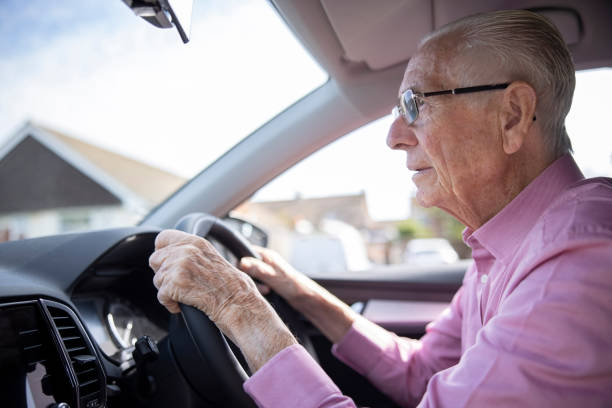
As you get older in NSW, there are extra requirements to keep your driver's licence. But the system has several different parts, and people often confuse them.
This article explains the three things that may apply to you as an older driver: the annual medical assessment, the older driver test, and the OT driving assessment. They're different processes, triggered at different ages and for different reasons.
The age-based requirements at a glance
Transport for NSW has a tiered system based on your age and licence class. For standard car licence holders, here's the summary:
Ages 70 to 74. No medical assessment or driving test is required unless your doctor recommends it. You renew your licence as normal.
Ages 75 to 84. An annual medical assessment (Fitness to Drive) is required. You visit your GP each year, and they complete the medical assessment form for Transport for NSW. An older driver test is only required if your doctor recommends it.
Age 85 and over. An annual medical assessment is still required. In addition, you must complete an older driver test every two years.
Note: different rules apply if you hold a heavy vehicle or multi-combination licence. The requirements above are for standard car (Class C) licence holders.
There's also a modified licence option available to older drivers. If you choose a modified licence, you're restricted to driving certain distances within your local area, but you don't need to complete the older driver test (unless your doctor recommends it). This can be a practical option for people who mainly drive locally. You can discuss this with your GP or Service NSW.
What is the annual medical assessment?
From age 75, you're required to have a medical assessment each year to renew your licence. Transport for NSW will usually send you a letter around 12 weeks before the assessment is due (typically near your birthday).
What it involves: You visit your GP (or a specialist, if directed). Your doctor assesses your medical fitness to drive using the Austroads Guidelines and completes the Transport for NSW Fitness to Drive form. The assessment covers your general health, vision, cognition, medications, and any conditions that may affect driving.
What it doesn't involve: Your doctor does not observe you driving. There's no on-road component. It's a clinical assessment done in the consulting room.
What happens after: Your doctor submits the form to Transport for NSW. Based on their assessment, your licence may be renewed as normal, conditions may be placed on your licence, or your doctor may recommend further assessment (including an OT driving assessment or an older driver test).
What is the older driver test?
The older driver test is a practical driving assessment. It's separate from the medical assessment and from an OT driving assessment.
When it's required: For standard car licence holders, the older driver test is required every two years from age 85. Between ages 75 and 84, it's only required if your doctor recommends it based on your medical assessment. If you hold a modified licence, you generally don't need to complete the older driver test unless your doctor recommends it.
What it involves: A practical on-road driving assessment conducted by an authorised assessor. The test evaluates your driving skills and road safety practices.
How it's different from an OT driving assessment: The older driver test is a practical assessment of driving skills. An OT driving assessment is a clinical evaluation of how a medical condition is affecting your driving. They serve different purposes, and being referred for one doesn't necessarily mean you'll need the other.
You can find authorised older driver assessors through Transport for NSW or Service NSW.
What is an OT driving assessment?
An OT driving assessment is a separate process that may be triggered at any age, not just for older drivers. It's specifically for people with a medical condition that may affect their ability to drive safely.
When it's required: Your GP or specialist may refer you for an OT driving assessment if, during your annual medical review (or at any other time), they identify a medical condition that may be affecting your driving. Common triggers include dementia or cognitive decline, stroke, Parkinson's disease, significant vision changes, or a combination of age-related conditions.
What it involves: A two-part evaluation conducted by a driver-trained occupational therapist:
Part 1 is an off-road clinical assessment at your home (for mobile services like Steer Driving), covering your medical history, vision, cognitive skills, and physical function. This takes approximately 60 minutes.
Part 2 is an on-road practical drive (approximately one hour) in a dual-controlled vehicle with the OT and a specialist driving instructor, in your local area.
What makes it different: The OT assessment is focused specifically on how a medical condition affects driving. It includes both clinical testing (which the older driver test doesn't have) and on-road observation (which the GP medical assessment doesn't have). The OT uses validated cognitive screening tools and assesses the clinical picture alongside the on-road performance.
What happens after: The OT provides a written report to Transport for NSW, your doctor, and you, with a recommendation about your licence.
How these three things relate to each other
Think of it as a progression:
The annual medical assessment is the routine checkpoint. Most older drivers pass this every year with no issues. Your GP reviews your health, fills out the form, and your licence is renewed.
The older driver test is a practical driving skills assessment required every two years from age 85 (or earlier if your doctor recommends it). It checks that you can still drive safely from a practical standpoint.
The OT driving assessment is triggered when there's a specific medical concern. It goes deeper than the other two, combining clinical evaluation with on-road observation, to determine whether a medical condition is making driving unsafe.
You may never need an OT driving assessment. Many older drivers go through their annual medical reviews and older driver tests for years without one. An OT assessment is only relevant if there's a medical condition causing concern.
Common scenarios
Scenario 1: You're 76, you go to your GP for your annual medical review, everything is fine, and your licence is renewed. No older driver test or OT assessment needed.
Scenario 2: You're 78, and your GP notices some cognitive changes during your medical review. They're not sure how (or whether) these changes are affecting your driving. They refer you for an OT driving assessment to find out.
Scenario 3: You're 85, and it's time for both your annual medical review and your two-yearly older driver test. Your GP clears you medically, and you pass the older driver test. Licence renewed.
Scenario 4: You're 82, and your family has raised concerns about your driving with your GP. Your GP refers you for an OT driving assessment (even though you're under 85 and wouldn't normally need the older driver test yet), because the concerns are related to a possible medical condition.
What if you're worried about an older family member?
If you have concerns about a parent's or relative's driving, the best first step is to raise it with their GP. The GP can assess the situation and determine whether a referral for an OT driving assessment is appropriate.
You can also contact Transport for NSW directly if you have serious safety concerns. They can review the driver's medical status and require assessment if warranted.
For more guidance, see our article on helping a parent stop driving.
How to start the OT assessment process
If your GP has referred you for an OT driving assessment, you can start the process at steerdriving.com.au/referral.
For information about older driver tests and licence renewals, contact Service NSW on 13 22 13 or visit service.nsw.gov.au.
This article was written by Elise, an AHPRA-registered Occupational Therapist and Transport for NSW-registered driver assessor. Elise is the founder of Steer Driving, a mobile OT driving assessment practice in Sydney.
FAQ Section
When do I need a medical assessment to keep my licence in NSW? From age 75, you need an annual medical assessment (Fitness to Drive) to renew your licence. Between 70 and 74, a medical assessment is only required if your doctor recommends it.
Do I need a driving test at 85 in NSW? Yes. From age 85, standard car licence holders must complete an older driver test every two years, in addition to the annual medical assessment. If you hold a modified licence, the older driver test may not be required unless your doctor recommends it.
What's the difference between the older driver test and an OT driving assessment? The older driver test is a practical on-road assessment of driving skills, required at certain ages. An OT driving assessment is a clinical evaluation of how a specific medical condition affects driving, including both off-road clinical testing and on-road observation. They serve different purposes.
Can I get a modified licence instead of doing the older driver test? Yes. A modified licence restricts you to driving certain distances within your local area. If you hold a modified licence, the older driver test is generally not required unless your doctor recommends it. Discuss this option with your GP or Service NSW.
Does the annual medical assessment involve driving? No. The annual medical assessment is a clinical assessment done by your GP in the consulting room. It does not include an on-road driving component.
How much does the annual medical assessment cost? Medicare may help cover the cost. Ask your GP whether the assessment can be bulk billed.