
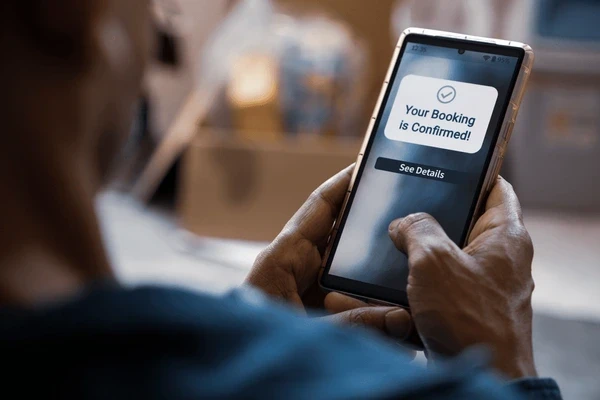
Your OT Driving Assessment Is Booked: What to Expect on the Day
Your assessment is booked. Now what?
If you're feeling nervous, that's completely normal. Most people feel some level of anxiety before their OT driving assessment, and the best thing I can do to help with that is to explain exactly what will happen, so there are no surprises.
This is a step-by-step walkthrough of what to expect on the day.
Before the day
What to have prepared
You'll need:
Your current driver's licence (physical or digital)
Your glasses, contact lenses, hearing aids, or any other aids you use
Any mobility aids you rely on (walking stick, frame, etc.)
Any medical reports or referral letters you have (though I'll already have these if they were sent with your referral)
Comfortable, closed-toe shoes that you'd normally wear when driving
Medications
Take your usual medications at your normal times. Don't skip doses, change timing, or take anything you wouldn't normally take. The assessment is about how you drive on a regular day.
If your medications are relevant to driving (for example, Parkinson's medication with on/off periods, or medications that may cause drowsiness), I'll ask about your medication schedule during the assessment so I can take timing into account.
The night before
Get a reasonable night's sleep. Don't stay up worrying. Eat a proper breakfast (or lunch, depending on your appointment time). Stay hydrated.
Who can be there
Family members, carers, or support workers are welcome to be present during the off-road part of the assessment. Many people find it helpful to have someone there, and family members often contribute useful observations.
During the on-road drive, it's just you, the OT, and the driving instructor in the car. This is to keep distractions to a minimum and give you the best chance.
The assessment itself
I come to you
Steer Driving is a mobile service, so I'll arrive at your home at the scheduled time. There's no need to travel to a clinic or find parking.
The whole assessment takes approximately 2 hours.
Part 1: The off-road assessment (approximately 60 minutes)
We'll sit down together (usually at your kitchen or dining table) and work through a series of assessments. This part is relaxed and conversational, and I'll explain what we're doing at each step. I'm not trying to trick you or rush you.
The clinical interview. II'll ask about things such as your medical history, your current symptoms, your medications, your driving experience, and any concerns you or your family have. This is a conversation that helps me understand your situation and tailor the rest of the assessment to what's relevant for you.
Vision screening. I'll check your visual acuity (how clearly you see at distance), your visual fields (your peripheral vision), and a few other visual skills that matter for driving. If you wear glasses or contacts for driving, wear them for the assessment.
Cognitive assessment. This is a series of tasks that assess the thinking skills needed for safe driving, including attention, concentration, processing speed, decision-making, spatial awareness, and the ability to follow instructions. The tasks might feel unfamiliar, and I'll walk you through each one before we start. Some people find certain tasks more challenging than others, and that's completely normal. Just do your best.
Physical assessment. I'll assess your strength, range of motion, coordination, and reaction time, with a focus on the movements needed to operate a vehicle (steering, braking, reaching for controls). If your condition affects one side of your body, I'll pay particular attention to how this impacts vehicle operation.
At the end of the off-road assessment, I'll talk through what I've found. If there are any areas of concern, I'll explain what they are and what I'll be watching for during the drive. If there are no concerns, I'll let you know that too.
Part 2: The on-road assessment (approximately one hour)
The driving instructor will meet us at your home with their dual-controlled vehicle. This is a car with an extra set of brakes on the passenger side, so the instructor can intervene if needed.
Getting comfortable with the car. Before we go anywhere, you'll have a few minutes to adjust the seat, mirrors, and familiarise yourself with the controls. Every car is slightly different, and there's no rush. If the car has controls in different positions to what you're used to, the instructor will walk you through them.
The drive itself. You'll drive for approximately one hour around your local area. The instructor will give you directions (turn left here, take the next right, etc.) unless told otherwise.
The route will include a mix of driving environments, such as:
Quiet residential streets
Main roads
Intersections
Roundabouts
Lane changes
Potentially some busier roads or short stretches of highway, depending on your area and what's appropriate for your situation
I'll be sitting in the back seat, observing and taking notes. I generally won't give you feedback during the drive to avoid distracting you, but the instructor may give you occasional guidance if needed.
What I'm watching for. I'm assessing how your medical condition affects your driving. This includes your hazard perception, decision-making, lane positioning, speed management, response to other road users, and your ability to manage everything at once. I'm also watching for fatigue or any decline in performance over the course of the drive.
What I'm not concerned about. Minor mistakes from nerves or unfamiliarity with the test vehicle are not what this assessment is about. I'm instead focused on patterns that relate to your medical condition.
After the drive
Immediate feedback
Once we're back at your home, I'll sit down with you (and your family, if they're there) and explain my findings. I'll tell you:
What I observed during the off-road and on-road assessment
Whether your medical condition appeared to affect your driving
What my recommendation will be
I believe in being direct and honest about results. You'll know where you stand before I leave.
The possible outcomes
Fit to drive with no restrictions. Your medical condition is not currently affecting your driving. I'll recommend that Transport for NSW allow you to keep (or regain) your licence.
Fit to drive with conditions. You can drive, but with restrictions. Common conditions include automatic transmission only, daytime driving only or driving within a specified radius of your home.
Driving lessons recommended. If I've identified specific issues that could improve with targeted practice, I may recommend a set number of lessons with a rehabilitation driving instructor. After completing the lessons, you'd come back for a reassessment.
Vehicle modifications recommended. If physical limitations are affecting your ability to operate the car, I may recommend equipment such as a steering knob, left-foot accelerator, or other adapted controls. You'd have lessons to learn to use them, followed by a reassessment.
Not fit to drive. If the effects of your medical condition are too significant for safe driving, I will recommend that your licence be cancelled.
The report
After the assessment, I prepare a detailed written report. This report is sent to:
Transport for NSW (who makes the final decision about your licence)
Your referring doctor(s) (GP, specialist, or rehabilitation physician)
You
The report summarises the clinical findings, the on-road observations, and the recommendation. It includes specific examples of what was observed, so there's a clear basis for the outcome.
Common concerns
"What if I'm having a bad day?" I take this into account. If you tell me you didn't sleep well, or you're feeling particularly unwell, or your medication timing is off, I'll factor that in.
"Will I fail just because I'm nervous?" No. Nervousness is expected and normal. I can distinguish between genuine driving difficulties and nerves. Minor shaky hands or a slightly hesitant start don't affect the outcome.
"What if I make a mistake?" Most people make some small mistakes during the drive. I'm not looking for perfection. What matters is whether there's a pattern of safety-relevant issues linked to your medical condition.
"What if I don't agree with the result?" If you disagree with the outcome, you're welcome to discuss it with me at the time. I'll explain my reasoning in detail. If you still disagree after that, the formal avenue is to appeal Transport for NSW's decision through the Local Court.
One last thing
The assessment is not designed to catch you out. I'm not trying to fail you. The goal is to find out whether your medical condition is affecting your driving, and if so, what can be done about it.
Many people are surprised at how straightforward the whole thing is. The most common thing I hear afterwards is "that wasn't as bad as I expected."
If you have any questions before your assessment, feel free to get in touch. I'd rather you turn up relaxed and informed than anxious and unsure.
Need an OT driving assessment in Sydney? Steer Driving is a mobile OT driving assessment service covering greater Sydney. If you have a referral from your GP or specialist, you can start the process below.
This article was written by Elise, an AHPRA-registered Occupational Therapist and Transport for NSW-registered driver assessor. Elise is the founder of Steer Driving, a mobile OT driving assessment practice in Sydney.
Frequently Asked Questions
How long does an OT driving assessment take? Approximately 2 hours in total: one hour for the off-road clinical assessment at your home, followed by approximately one hour of on-road driving.
Do I drive my own car during the assessment? No. You drive a dual-controlled vehicle provided by the specialist driving instructor. This car has extra safety controls so the instructor can intervene if needed.
Can family members be present during the assessment? Yes, during the off-road (clinical) part. Family members often provide useful observations. During the on-road drive, only you, the OT, and the driving instructor will be in the car.
Should I take my medications before the assessment? Yes. Take your usual medications at your normal times. The assessment is meant to reflect a typical day for you.
Will I get my results on the day? Yes. The OT will discuss the outcome with you immediately after the on-road drive. A formal written report is then prepared and sent to Transport for NSW, your referring doctor(s), and you.
What if I haven't driven for a while? That's common, especially if you've been unwell or waiting for a referral. The OT will take your recent driving history into account.